Dr. Gymbro
←

#research review

1 article
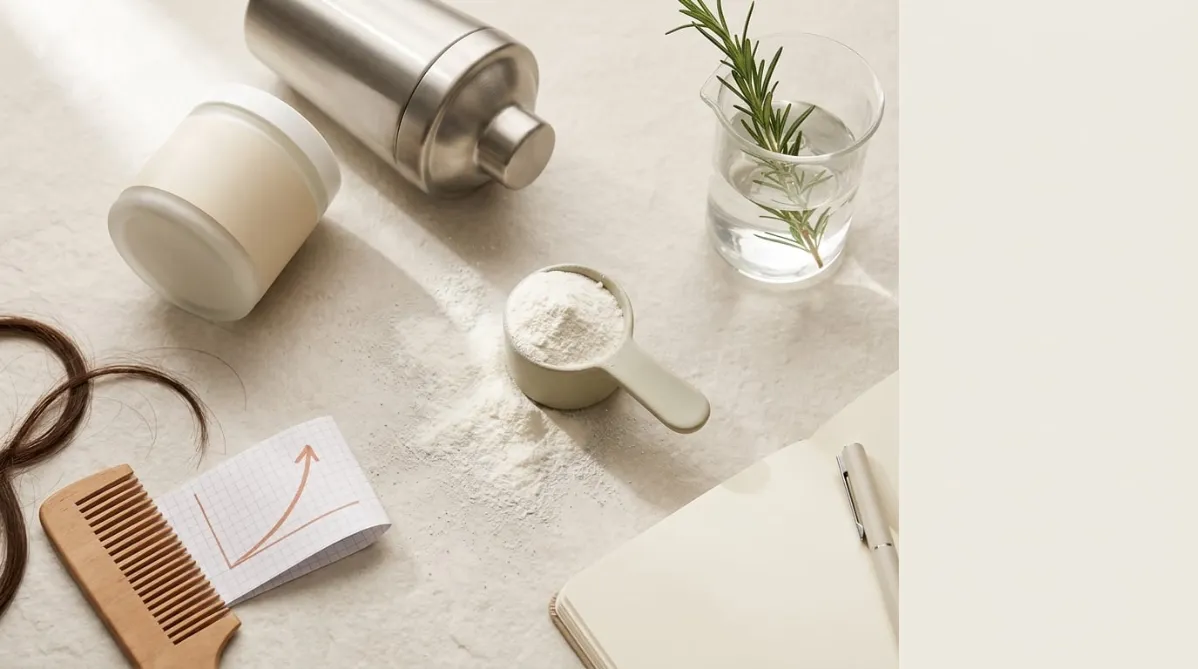
A bright, modern editorial flat-lay photographed from above on a soft off-white stone surface. At the center sits a matte ceramic scoop heaped with fine white creatine powder, with a loose dusting of powder fanning out across the surface. Beside it is a minimalist frosted-glass jar with a plain label and a brushed-steel shaker bottle lying on its side. To the left, a wooden comb and a small folded strip of graph paper with a single hand-drawn upward curve in muted terracotta ink, suggesting a data spike without any text. A few loose strands of dark brown hair curve elegantly across the stone near the comb. To the right, a clean glass beaker filled with water and a sprig of green rosemary, and an open notebook with blank pages and a sleek pen. The palette is warm neutrals: cream, sand, soft sage green, and a single accent of terracotta orange. Natural window light falls from the upper left, casting long, gentle shadows and a subtle diffused glow. The composition leaves generous negative space on the right third for title overlay. Shallow depth of field with crisp focus on the powder scoop, a premium health-and-science magazine look, minimalist, calm, and trendy, with fine grain and soft contrast. Landscape 16:9 framing.
science research

Créatine et perte de cheveux : l’augmentation de 56 % du DHT expliquée

BY DR. GYMBRO ·

Une étude de 2009 a montré qu’une phase de charge de créatine de 7 jours à 25 g/jour augmentait le DHT de 56 %, les niveaux restant environ 40 % au‑dessus du point de départ avec une dose d’entretien de 5 g/jour, tandis que la testostérone restait stable. Comme le DHT est associé à la calvitie masculine, ces résultats ont alimenté le débat sur la créatine et la perte de cheveux. Mais l’essai ne comptait que 20 joueurs de rugby, ne durait que trois semaines et n’a jamais mesuré la chevelure. Des études ultérieures n’ont pas reproduit de façon systématique cette hausse du DHT. Voici ce que révèlent réellement les recherches, qui pourraient être concernés et comment ajuster votre approche si vous êtes inquiet.

This page is available in